
A collection of thoughts, irony, and small reflections from a Linux mind.
Not everything in tech needs to be fast, big, or modern.
Sometimes, 256MB is enough.
When 256MB Was Enough (And Still Is)
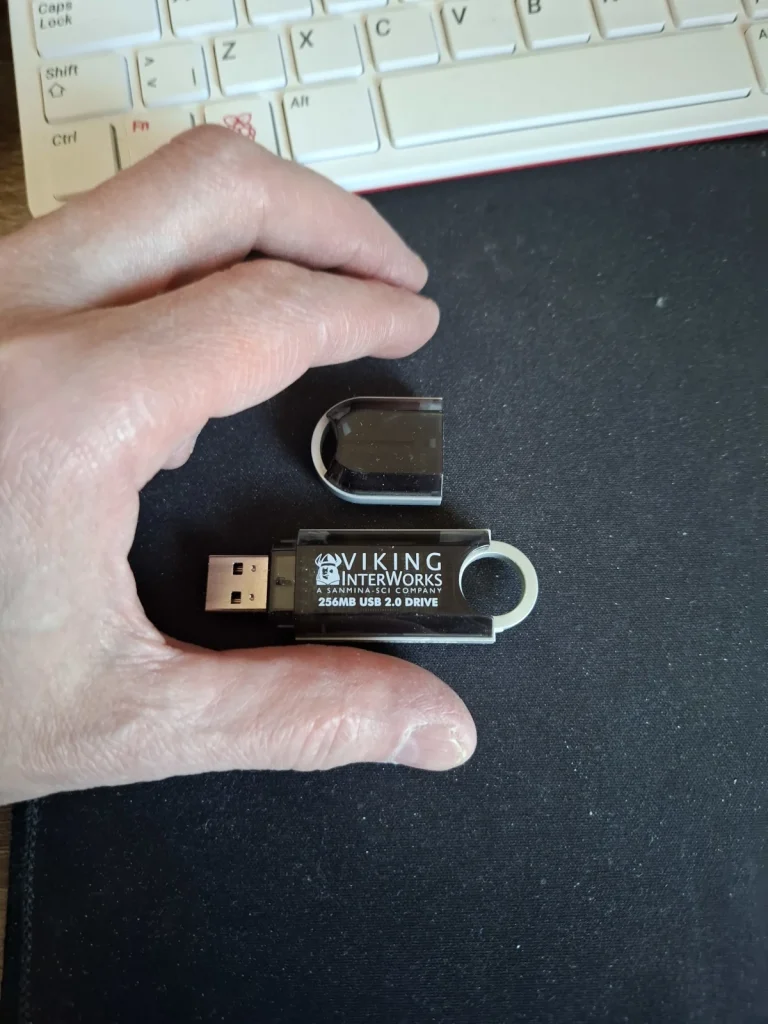
© 2026 Robert William Blennerhed(Photo)
I’m a Swedish Viking.
I don’t need cloud sync.
I don’t need AI running locally.
I don’t need 1TB SSD.
I have 256MB.
And Puppy Linux
Still boots faster than most modern systems.
Still does the job.
Sometimes, less isn’t just more.
It’s enough.
A Memorial for Machines
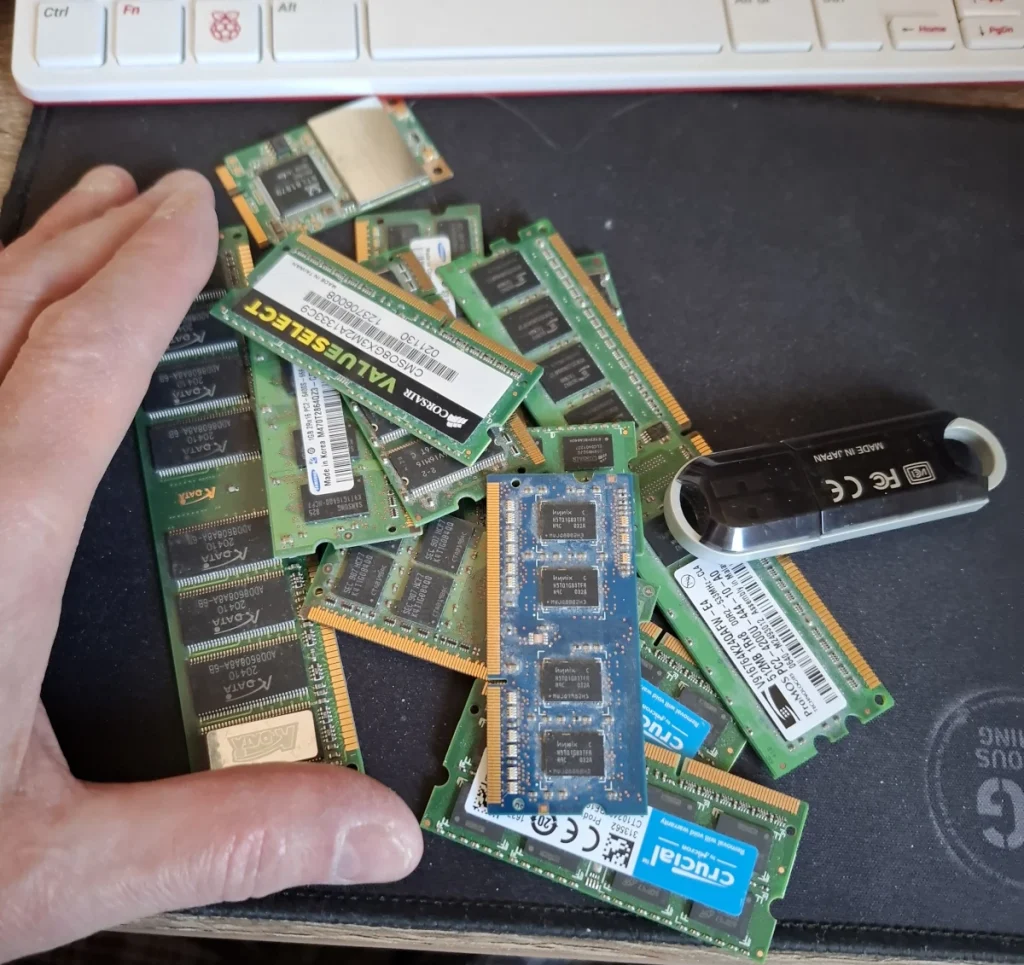
© 2026 Robert William Blennerhed(Photo)
I’ve been collecting memories for 25 years.
Not in my head.
On old computers.
Maybe it’s time to make a memorial plaque…
for the hardware that remembered everything.
The Day @ Became a Cinnamon Bun
Back in the 80s and 90s, we future computer nerds had fun with variable names in BASIC.
DIM Eastwood(10)DIM Slasktratt(20)DIM Bananas(7)
And of course…
In Sweden, we called @ a “kanelbulle”.(Cinnamon)
Years later, I needed an email address for our housing association board.
So I called support and said:
“border cinnamon company.se”
He created the address. No problem.
Or so I thought.
The board later asked why the email wasn’t working.
I called again.
And then I asked him to read it back to me.
He said:
styrelsenkanelbulle@company.se or
bordercinnamon@company.com
…
That’s when I realized:
Not everyone speaks fluent nerd.
Python – Slow? Only if You Watch It Too Closely
Some young developers say Python is slow.
I understand them. They grew up counting milliseconds.
I grew up when computers needed time to think.
Also, a small secret:
Many Python libraries are powered by C and C++ under the hood.
So while the code looks calm and simple, something much faster is working quietly behind the scenes.
And if I really need speed?
I can always drop down to C++ and write a fast console program.
Python is not trying to win a speed contest.
It is trying to get things done.
And sometimes the fastest program
is the one that actually gets finished.
Robert William Blennerhed, RWB Tech Lab
Grandpa’s Silicon Legacy – When CPUs Still Needed Time to Think
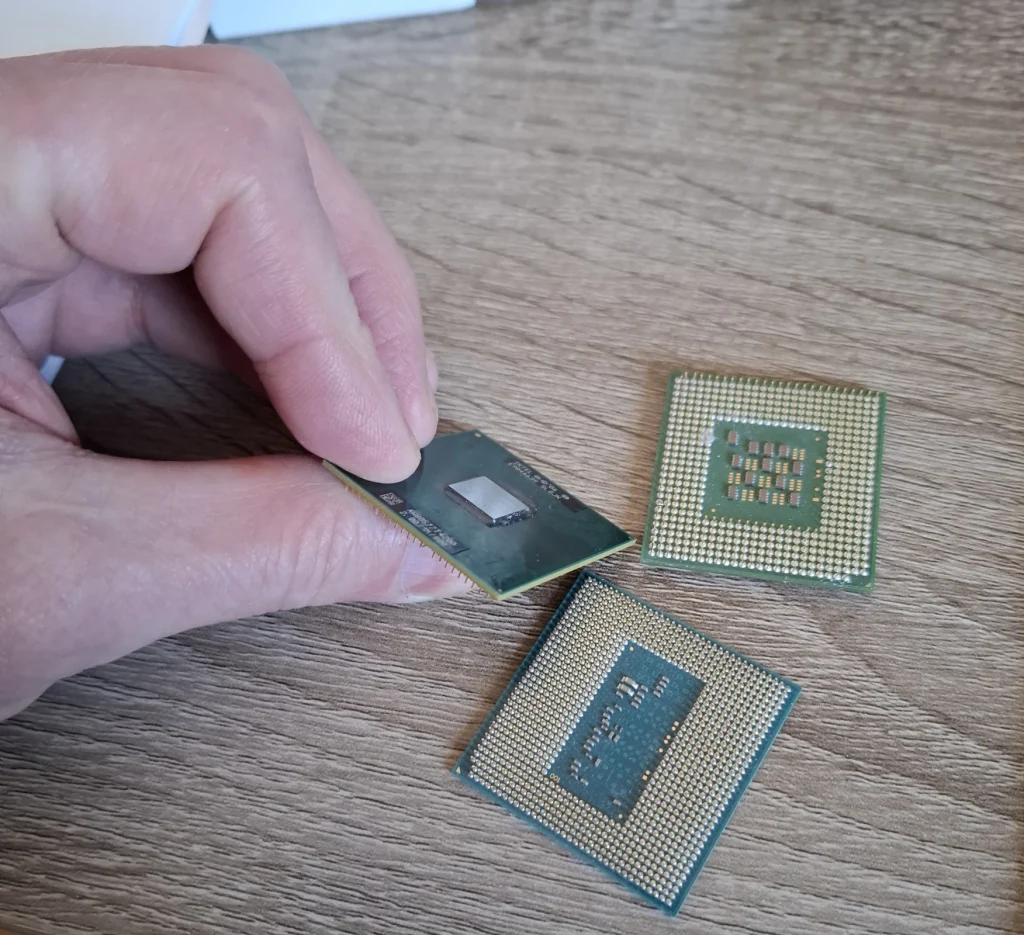
© 2026 Robert William Blennerhed(Photo)
Once upon a time, these were not museum pieces.
They were the brain of real machines.
No cloud.
No AI assistants.
No “instant everything.”
Just raw silicon… doing its best.
These CPUs powered systems that booted slowly,
worked honestly,
and sometimes made you wait long enough
to actually think before the computer did.
Today, they fit in a hand.
Back then, they carried entire worlds.
Inheritance Plan (Non-Financial)
These will not increase in value.
They will not run modern software.
They will not impress your friends.
But they will answer one important question:
“What did Grandpa actually use… before everything became instant?”
Final Note
If you hold one of these long enough,
you might feel it…
Not heat.
Not electricity.
But something older:
Patience.
Robert William Blennerhed – RWB Tech Lab
USB Drives & SD Cards – The Portable Memory That Built My Digital Life
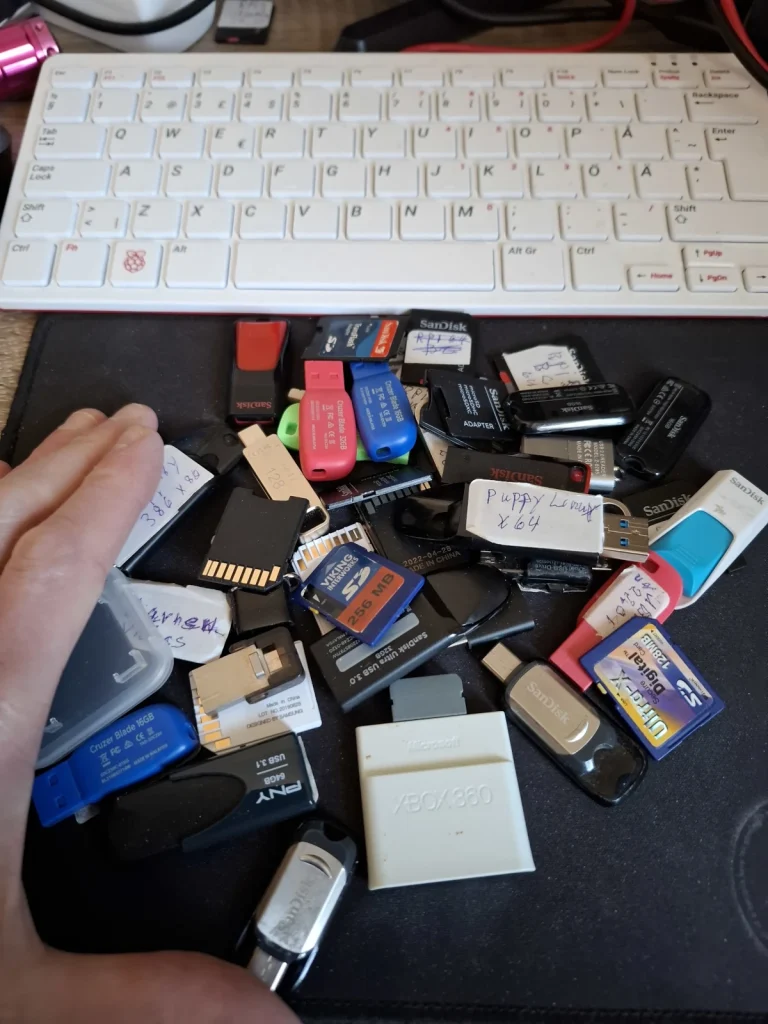
© 2026 Robert William Blennerhed(Photo)
Before cloud storage, before instant sync, before everything lived somewhere “out there”…
my digital life lived here.
In these small pieces of plastic and silicon.
Backups.
Projects.
Operating systems.
Experiments.
Some labeled.
Some forgotten.
Some still carrying data from another time.
The Real Truth
These weren’t just storage devices.
They were control.
No subscriptions.
No accounts.
No internet required.
Just plug in… and your world followed.
Today? SSD Everywhere
Yes, SSD is faster.
Cleaner.
More modern.
But something was lost along the way:
The feeling of holding your data in your hand.
How will I live without you?
Truth is…
I probably won’t.
Because somewhere, in a drawer,
there will always be one USB stick or SDCard,
with something important on it.
And I will still trust it.
Robert William Blennerhed – RWB Tech Lab
From 500 KB to the Cloud — My 5.25-inch Floppy Disk
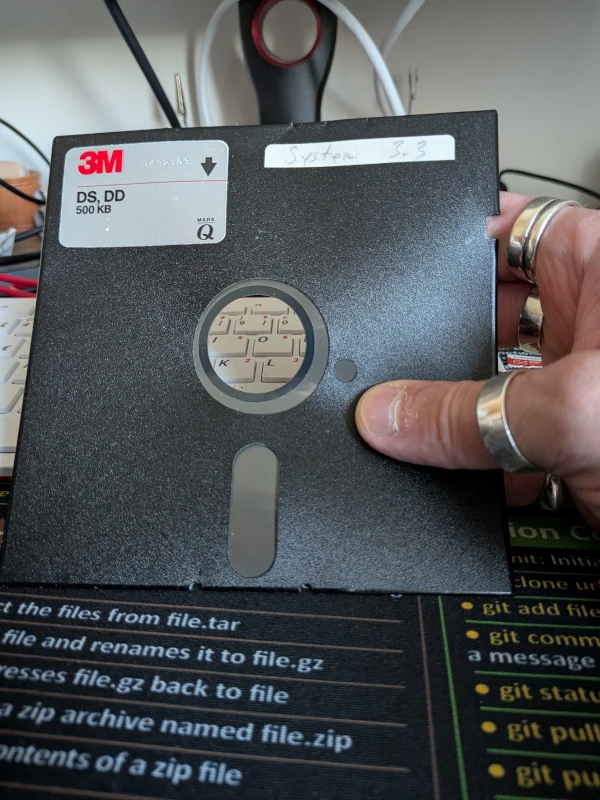
My Floppydisk.
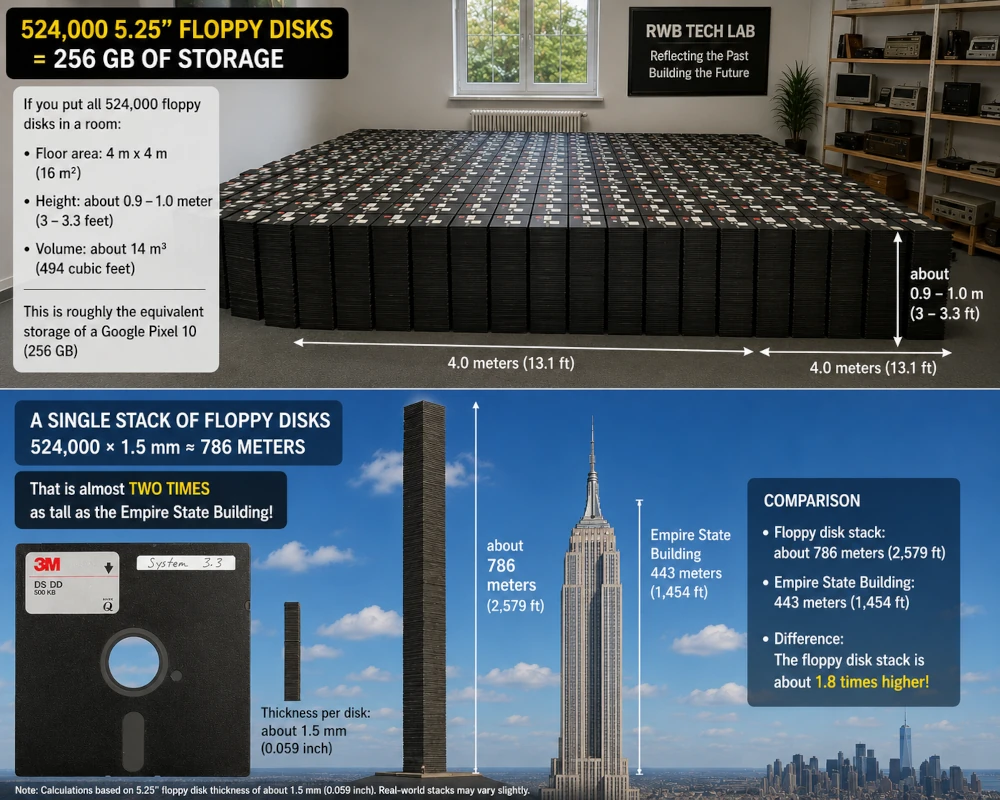
From 500 KB to 256 GB
When I started working with computers, a 5.25-inch floppy disk holding 500 KB felt like a perfectly normal way to store software and data.
Today, my Google Pixel 10 has 256 GB of internal storage. To put that into perspective, it would take roughly 524,000 of these 500 KB floppy disks to match that capacity.
If stacked one on top of another, those disks would reach approximately 786 meters into the sky — about 1.8 times the height of the Empire State Building.
And if they were packed into a 4 × 4 meter room, they would fill almost the entire room to around one meter high.
For me, this is more than just an interesting calculation. That floppy disk in the picture is one of my own disks from the early days of my computing journey. Today, decades later, I carry the equivalent of more than half a million of them in a device that fits in my pocket.
Technology changes. Curiosity remains.
RWB Reflections — Reflecting the Past, Building the Future.
Two Generations in My Hand — LG G3 and Google Pixel 10
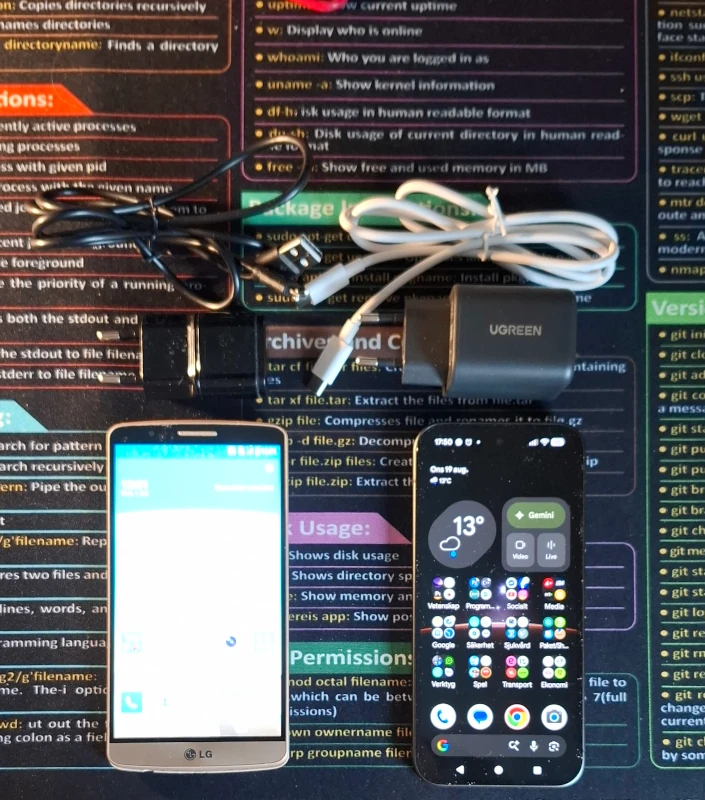
From LG G3 to Google Pixel 10 — and Many Phones Along the Way
This photo shows two very different generations of smartphones from my own tech journey.
On the left is my old LG G3, together with its original charger. On the right is my much newer Google Pixel 10, which I charge with a compact UGREEN 45W USB-C charger. The same charger also works with my power bank, which means one small charger can now replace several older dedicated chargers.
The change is not only about faster processors, better cameras and more storage. Even something as simple as charging has become more flexible and universal. USB-C and modern power delivery make it possible to use one charger for several devices instead of keeping a different charger for every product.
For me, this picture is another reminder of how quickly everyday technology changes.
The LG G3 was once a modern flagship phone. Today, it sits next to a Pixel 10 — and both are part of the same personal technology story.
Different generations. Same curiosity.
RWB Reflections — Reflecting the Past, Building the Future.
© 2026 Robert William Blennerhed. All rights reserved.
Content and software published on this site may not be copied or redistributed without permission.